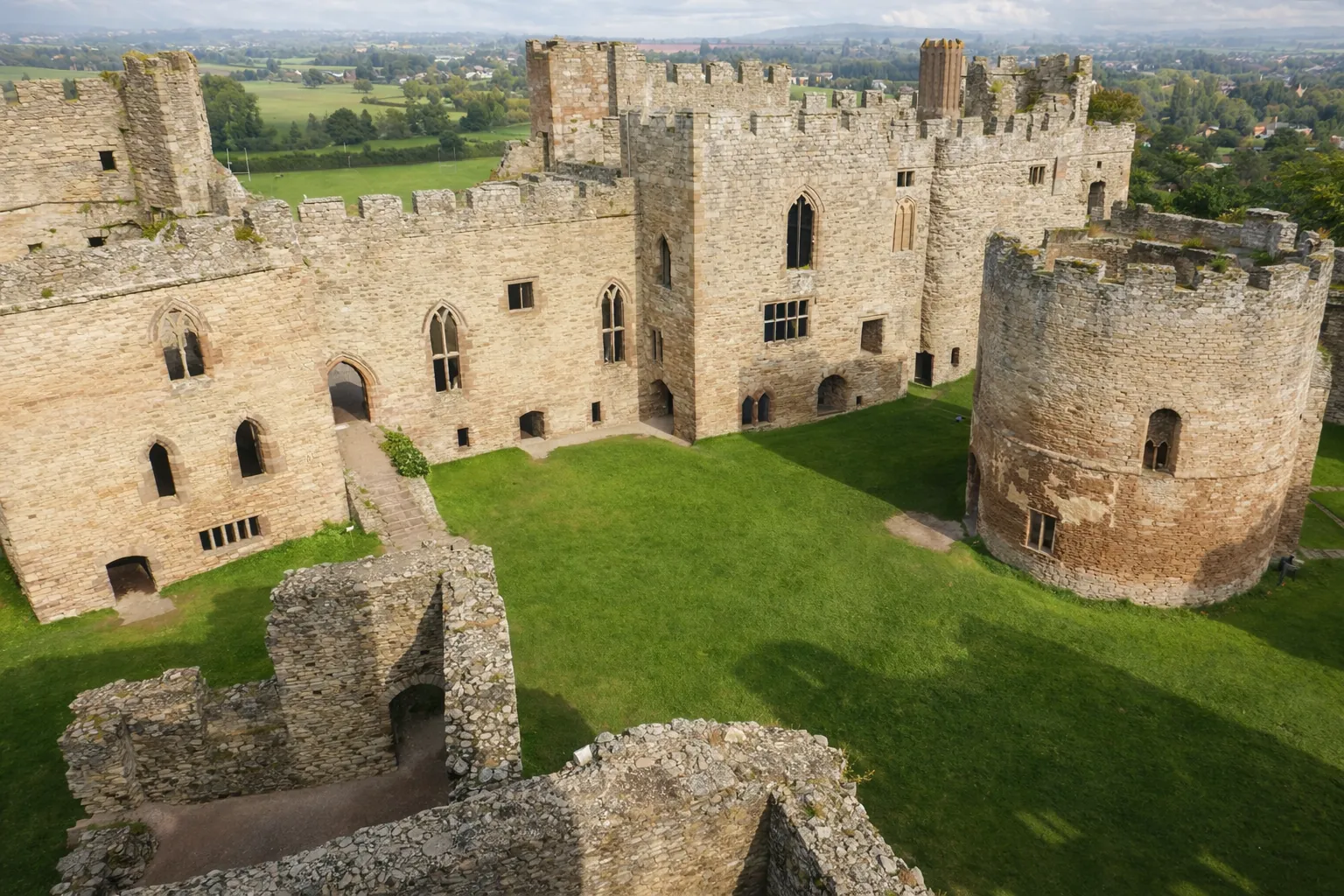
Standing on the edge of the River Teme, Ludlow Castle rises not as a remote mountain fortress, but as a place of authority woven directly into the life of a town. This is a castle that once governed, judged, and ruled — not just defended. Walking toward its great gatehouse today, it’s easy to imagine clerks, councillors, nobles, and messengers passing through these same walls, carrying the business of a kingdom.
Unlike many castles built purely for war, Ludlow Castle history reveals a fortress shaped by politics, law, and royal administration on the volatile Welsh Marches.
Norman Origins and the Castle Approach
The de Lacy family founded Ludlow Castle in the late 11th century, creating one of the earliest stone castles on the Welsh border. Its position above the River Teme guarded an important crossing while allowing the lords of Ludlow to oversee the planned town that developed outside the gate.
The approach still feels deliberate. The outer walls dominate the town, while the gatehouse opens into an inner bailey shaped by centuries of rebuilding. Among its most distinctive survivals is the circular Norman chapel, dedicated to St Mary Magdalene and unusual among English castle chapels.
Why Ludlow Mattered: Power on the Welsh Marches
Ludlow Castle’s importance came from its position. The Welsh Marches were a frontier zone, neither fully English nor fully Welsh, where loyalty was tested and authority had to be enforced carefully. From here, royal officials oversaw justice, taxation, and regional control.
Ludlow’s role changed dramatically in 1473, when Edward IV sent his son, Edward, Prince of Wales, to live here and established the Council of the Marches around his household. The council developed into a powerful administrative and judicial body governing Wales and the English border counties on behalf of the Crown.
Much like Cardiff Castle history, Ludlow Castle evolved beyond pure defence to become a powerful centre of governance and control.
Inside the Castle Walls
Walking deeper into the ruins, the remains of the great hall, residential ranges, and service buildings reveal a complex, functioning centre of power. The great hall would once have echoed with formal proceedings, feasts, and public displays of authority.
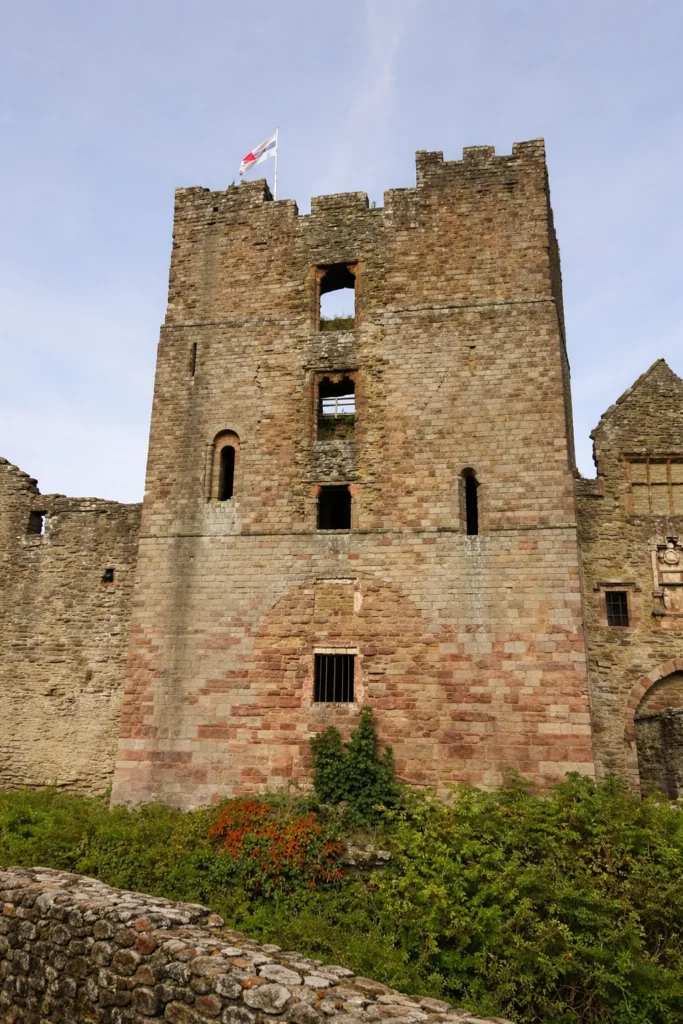
Nearby living quarters remind visitors that this was also a domestic space. Lords, councillors, and royal family members resided here for extended periods. Windows, fireplaces, and chambers speak to comfort as well as control.
Like Warwick Castle history, Ludlow combined military presence with domestic and administrative life under noble and royal control.
Ludlow and the Princes of Wales
Ludlow Castle holds a special place in royal history as the residence of princes destined for the throne. Most notably, it became the home of Prince Arthur, eldest son of Henry VII and heir to the Tudor dynasty.
Arthur’s residence here marked Ludlow as a training ground for kingship. The castle was chosen not for luxury alone, but for its political importance. A prince living here learned governance on the frontier, where diplomacy, authority, and justice met daily reality.
This role mirrors the dynastic importance seen at Pembroke Castle history, another fortress closely tied to royal power and succession.
Arthur’s untimely death would alter the course of English history, eventually leading to the reign of his younger brother — Henry VIII.
Historical Figure Spotlight: Prince Arthur, Prince of Wales
Prince Arthur arrived at Ludlow as a symbol of stability for the new Tudor dynasty. Educated, politically groomed, and newly married to Catherine of Aragon, he represented continuity after decades of civil war.
Arthur returned to Ludlow with his new wife, Catherine of Aragon, after their marriage in 1501. His time here was brief but significant: the castle placed him at the centre of regional government. When he died at Ludlow in April 1502, aged just fifteen, England’s dynastic future shifted toward his younger brother, the future Henry VIII.
Walking through Ludlow Castle today, it’s impossible not to reflect on how close history came to unfolding very differently.
The Castle Today: Ruins with Authority
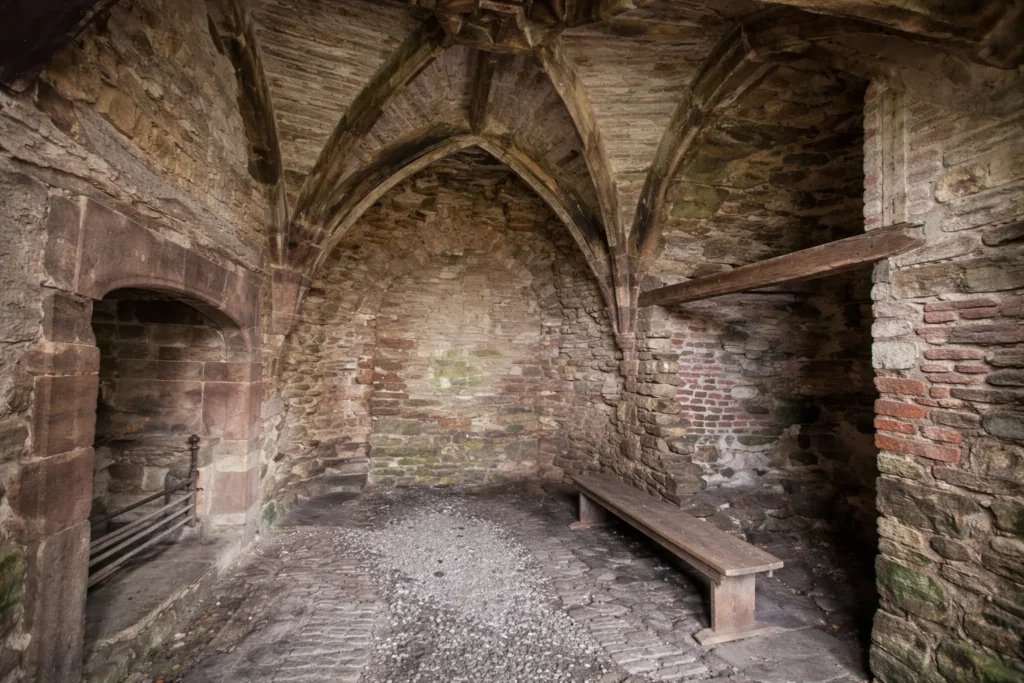
Ludlow Castle now stands roofless in places, its walls open to sky and weather. Yet it has lost none of its presence. Unlike more remote ruins, Ludlow still feels connected to the town it once governed.
As you move through the site, the story is clear: this was not merely a defensive stronghold, but a working heart of power. While castles such as Conwy Castle history projected authority through sheer military dominance, Ludlow ruled through administration and law.
Final Thoughts
Ludlow Castle rewards slow exploration. It invites visitors to think beyond battles and walls and consider how medieval and Tudor power was exercised day by day. For anyone interested in royal ambition, law, and frontier politics, Ludlow offers one of Britain’s most compelling castle experiences.
📣 Call to Action
If you enjoyed walking Ludlow Castle through history, share this post on social media and explore more castles at brianwelsh500.com, where the journey through Britain’s greatest fortresses continues.
Planning Your Visit to Ludlow Castle
Ludlow Castle is a ticketed attraction in the centre of Ludlow. Opening hours vary by season and can change for events, so check the official opening-times and ticket page before travelling.
- Location: The entrance is off Castle Square, within easy walking distance of Ludlow town centre.
- Access: The grounds include uneven historic surfaces, steps, and roofless ruins; consult the castle’s current access information when planning your route.
- Allow time: Give yourself at least 90 minutes to explore the baileys, towers, chapel, and residential ranges.
Where to next?
Continue west to Wigmore Castle, the Mortimers’ earlier Marcher stronghold, or follow the route south toward Goodrich Castle above the River Wye.