Wigmore Castle History: Power, Ruin, and the Rise of the Mortimers
Wigmore Castle was never built simply to impress with towering walls or royal grandeur. As you climb from the village toward this quiet Marches stronghold, the surviving earthworks and stone begin to reveal its former scale. These ruins once stood at the centre of one of medieval England’s most powerful noble dynasties.
Where Is Wigmore Castle Located?
Wigmore Castle stands in north-west Herefordshire, close to the modern Welsh border and about eight miles west of Ludlow. Reaching it involves a walk from the village followed by a steep climb, which helps explain why the Mortimers valued this commanding position.
From the slopes, the surrounding valleys and routes become easier to understand. The castle could watch movement through the landscape while overseeing estates, farmland, deer parks, fishponds, and the nearby abbey where members of the Mortimer family were buried.
Wigmore Castle and Its Norman Origins
William fitz Osbern founded Wigmore Castle in 1067, soon after the Norman Conquest. The first defences combined large earthworks with reinforced timber walls. After the Mortimers gained the castle, they rebuilt it gradually in stone during the 12th and early 13th centuries.
The surviving inner gatehouse and D-shaped east tower belong to this period of rebuilding. Later work added stronger defences and increasingly comfortable rooms, showing how Wigmore developed from an early frontier fortress into the centre of a great Marcher lordship.
Wigmore Castle formed part of a wider network of Marcher fortifications, a role more visibly expressed at Ludlow Castle, which later developed into a major administrative Centre for the Welsh borderlands.
The Mortimers of Wigmore Castle
Wigmore Castle is inseparable from the rise of the Mortimer family, one of the most powerful dynasties to emerge from the Welsh Marches. From this base, the Mortimers controlled vast estates, raised armies, and exerted influence that reached deep into English politics.
Roger Mortimer, 1st Earl of March, became the family’s most famous—and most notorious—member. Working with Queen Isabella, he helped overthrow Edward II and then became England’s effective ruler. In 1329, he staged a lavish tournament at Wigmore attended by Isabella and the young Edward III. His power collapsed the following year, when Edward III arrested him and had him executed for treason.
Roger’s fall did not end the dynasty. The Mortimers later regained their estates, and their family connections ultimately helped shape the claim of the House of York to the English throne. Although Ludlow eventually replaced Wigmore as their principal residence, this castle remained the symbolic heart of their rise.
What Remains at Wigmore Castle Today
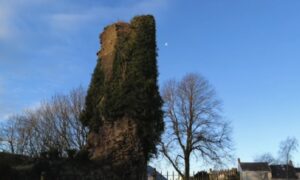
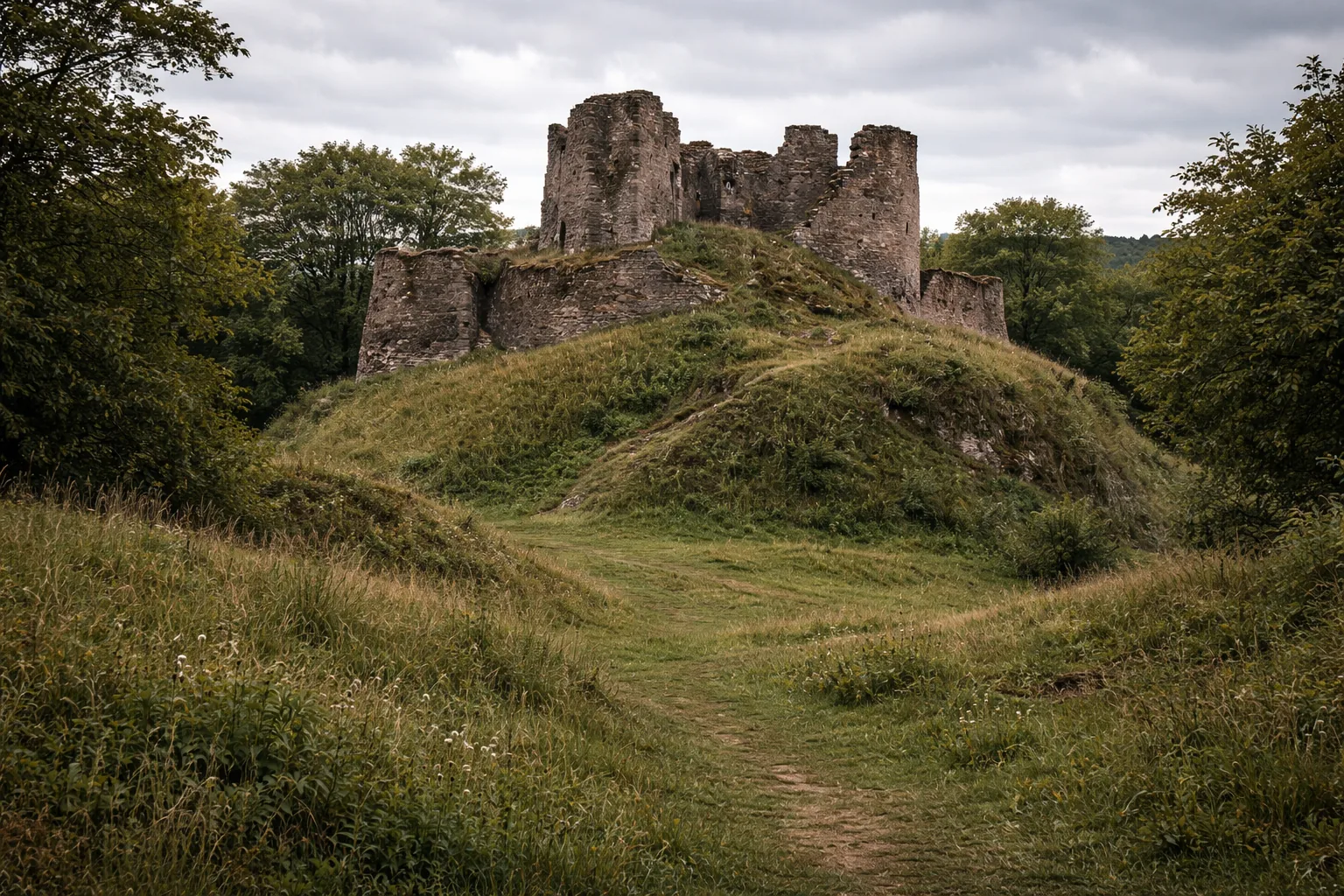
Wigmore is now an open, atmospheric ruin. English Heritage deliberately conserved it without stripping away the vegetation and fallen masonry that had protected much of the site, so exploring it feels very different from walking through a heavily restored castle.
You can still trace:
- The massive earthworks and towering motte
- The inner gatehouse and D-shaped east tower
- Curtain walls, buried masonry, and the outlines of former high-status rooms
There is no visitor centre inside the ruins. Instead, stone, grass, trees, and steep paths create a quiet site that rewards patient exploration.
Why Wigmore Castle Still Matters
Unlike famous royal castles built as statements of dominance, Wigmore represents the everyday mechanics of medieval power. This was a functioning castle—administrative, strategic, and deeply connected to land ownership and loyalty.
Its history offers a clearer picture of how power actually operated in the Welsh Marches, far from the pageantry of royal fortresses. Its story reveals how regional lords could accumulate influence strong enough to challenge the crown itself.
Visiting Wigmore Castle Today
Wigmore Castle is cared for by English Heritage. Entry is free, and the site is normally open during reasonable daylight hours. Check the official page before travelling because conservation work can temporarily restrict parts of the ruins.
- Access: A steep three-quarter-mile approach follows footpaths from the village; sturdy footwear is recommended, especially after rain.
- Facilities: Limited parking and public toilets are available near the village hall, around a 15-minute walk from the castle.
- Current notice: The keep may be closed while English Heritage repairs its steps, although the rest of the castle remains accessible.
A visit to Wigmore works especially well alongside Ludlow Castle. Together, they show how the Mortimers moved from a rugged Marcher base to a larger political and administrative centre.
From Wigmore, the castle journey continues south to Goodrich Castle, where high red-sandstone walls reveal a later and more complete vision of Marcher power.
For current access information and temporary closures, check the official English Heritage page for Wigmore Castle.
Where to next?
Continue the journey south to Goodrich Castle, then follow the River Wye onward to Chepstow.
Share the Journey
If you enjoyed exploring Wigmore Castle, please share this article on social media and visit Exploring the Rich History of the UK and Ireland for more castle journeys and historical stories.